 UK
UK FR
FR DE
DE

Etablissements Othon FEY / Our History
The Birth of the Company
Born in Burbach, Saarland (Germany), Nicolas FEY (1899–1972), a tinsmith by trade, founded his own company in 1932, setting up a small workshop in Neunkirch-lès-Sarreguemines, Lorraine.
Accompanied by one worker and two apprentices, he specialized in the manufacture and installation of gutters, as well as roofing for buildings and agricultural sheds.
The company gradually developed in the region and experienced a particularly prosperous period in 1938–1939 when the French government called on its services for the construction of the Maginot Line, notably at Légeret and the Simserhof fortifications.
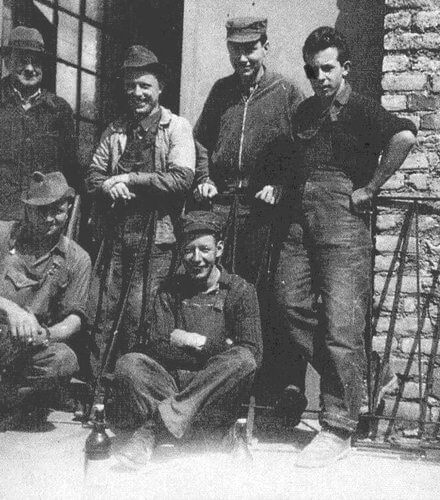
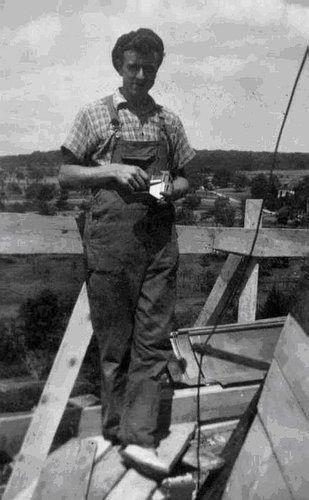
Until 1949, Nicolas FEY and his eight workers actively participated in rebuilding villages partially destroyed during the war, carrying out work in roofing metalwork, sanitary plumbing, and locksmithing.
Over the years, activities diversified: from gutters to sanitary installations, water and gas piping to repairs of church roofs, and the production of stove pipes, the famous “Owerehr.”
During this period, Nicolas expanded his workshop to reach a surface area of 120 m².
Expansion
Born in 1930 in Gersheim, Germany, Othon FEY (1930–2009) joined his father’s company at a young age. At just twelve years old, he began working on-site and started an apprenticeship as a roofer and sanitary installer in 1944.
Holder of a journeyman’s certificate and later a master craftsman’s diploma in tinsmithing, he continued the family company’s traditional activities. The company then experienced strong growth, especially through the development of the industrial production of stove pipes and extraction systems.
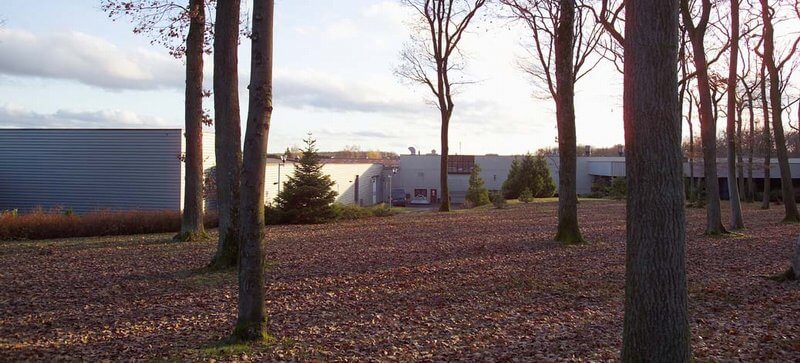
In 1966, Othon officially succeeded his father. He made a strategic shift by abandoning building work to focus on the industrial transformation of tubes, particularly in the heating sector. This shift required significant investment in machinery.
In 1975, the construction of a new 1,700 m² factory in the Rémelfing industrial zone marked a decisive step. The Moselle-East artisanal company became a recognized industrial player, opening up to subcontracting markets across eastern France.
Modernization
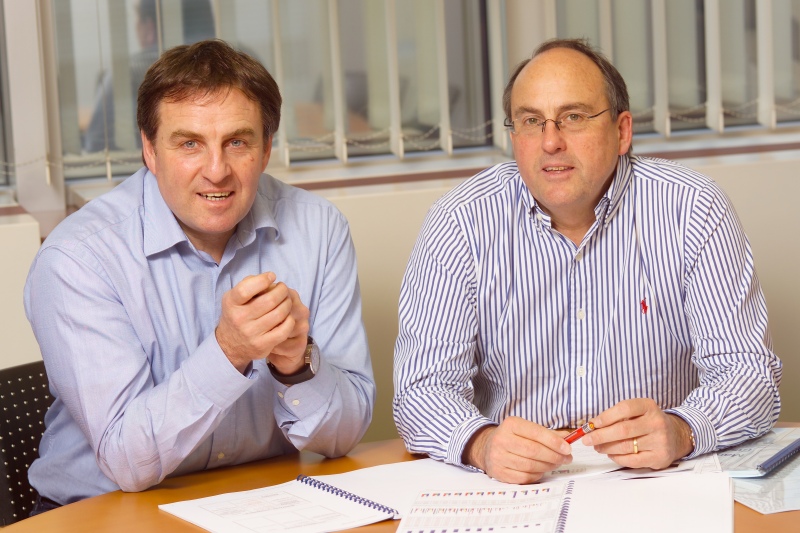
With the arrival of the third generation, Jean-Jacques in 1978 and Richard in 1981—both with technological backgrounds—the company gained new momentum and expanded into the European market.
In the 1990s, Othon gradually handed over management to his sons. New investments in cutting-edge technology machinery enabled increased automation and robotics in production, supporting continuous growth.
Production space thus grew from 2,200 m² in 1988 to 6,000 m² in 1996, and then to over 8,000 m² in 2006. Staffing followed the same trajectory, increasing from a twenty-strong team in 1978 to more than 100 employees.
This growth accompanied diversification into tube and sheet metal processing, opening the company to new business sectors on a European scale.
By 2010, thanks to clients throughout Europe, the products of Etablissements FEY were present on five continents.